

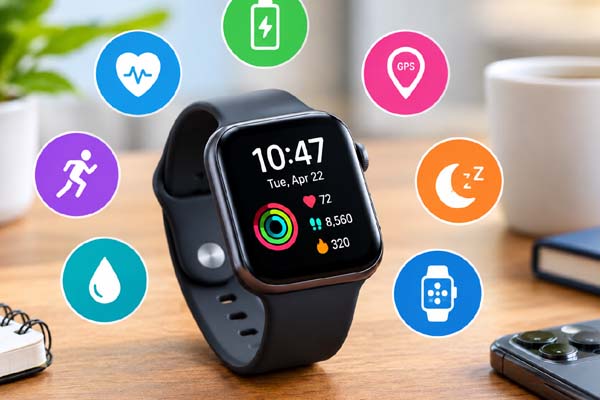
The most important smartwatch features are health tracking, battery life, display quality, comfort, durability, and smartphone compatibility. You should choose features based on how you plan to use the watch rather than paying for every available function. Fitness users may prioritize heart-rate and GPS tracking, while everyday users may care more about notifications, battery life, and ease of use. A good Smartwatch Buying Guide should help you separate genuinely useful features from specifications that sound impressive but may not matter in daily use.
1. Check Compatibility and Operating System
Before comparing features, make sure the smartwatch works properly with your smartphone. Some watches offer their best features only when paired with a specific operating system or phone brand.
Check whether the watch supports your version of Android or iOS and what functions are available on each platform. Features such as replying to messages, making calls, installing apps, or syncing health data can vary between devices.
Also consider the companion app. A reliable app makes it easier to view activity records, manage settings, install updates, and understand health information.
2. Focus on Health and Fitness Features
Health and fitness tracking can be one of the main reasons to buy a smartwatch. However, you do not necessarily need every sensor available.
| Feature | Useful For |
| Heart-rate monitoring | Exercise and general activity tracking |
| Sleep tracking | Understanding sleep patterns |
| Step counting | Daily movement goals |
| GPS | Running, cycling, and outdoor activities |
| SpO₂ tracking | General wellness information |
| Workout modes | Recording different types of exercise |
For regular workouts, accurate heart-rate tracking and built-in GPS can be more useful than having dozens of workout modes. If you mainly want everyday activity tracking, steps, heart rate, and sleep monitoring may be enough.
Remember that smartwatch health measurements are generally designed for wellness and fitness purposes, not as a replacement for professional medical equipment.
3. Consider Battery Life, Display, and Comfort
Battery life directly affects how convenient a smartwatch is. A watch that needs charging every day may become frustrating, especially if you want to monitor sleep overnight. Look at the manufacturer’s typical battery estimate and consider that features such as GPS, an always-on display, and frequent notifications can reduce battery life.
The display also matters. AMOLED screens usually provide strong contrast and bright colors, while screen brightness is particularly important if you spend time outdoors.
Comfort is equally important. A smartwatch can have excellent specifications but still be unpleasant to wear. Check its size, weight, strap material, and case design. If you plan to sleep with it, a lighter design may be more comfortable.
4. Look at Smart Features and Durability
Smart features can make a smartwatch useful throughout the day. Depending on the model, you may get notifications, music controls, contactless payments, voice assistants, calls, alarms, calendars, and downloadable apps.
Think about which features you will actually use. If you only need notifications and basic controls, spending more for advanced functions may not provide much additional value.
Durability is another important consideration. Look for suitable water resistance if you plan to wear the watch while swimming or exercising. Scratch-resistant glass and a sturdy case can also help the watch handle everyday use.
5. Choose Features That Match Your Budget
The best smartwatch is not necessarily the one with the longest feature list. Start by identifying your main needs and then compare models within your budget.
For fitness, prioritize GPS, heart-rate tracking, workout features, and battery life. For everyday use, focus on notifications, comfort, display quality, compatibility, and battery performance. For outdoor activities, durability and GPS may deserve greater attention.
Also check software support and update policies before buying. A watch that receives regular software improvements can remain useful for longer.
Conclusion
A smartwatch should make everyday tasks, fitness tracking, or health monitoring more convenient. Prioritize compatibility, battery life, comfort, display quality, useful health sensors, and the features you will actually use. By comparing these areas instead of simply chasing specifications, you can choose a smartwatch that fits your lifestyle and budget.
For more tips, check out these 10 best smartphone features to look for before buying your next phone.
FAQs
1. What is the most important feature in a smartwatch?
It depends on your needs. Battery life, smartphone compatibility, health tracking, comfort, and durability are among the most important factors for most users.
2. Is GPS important in a smartwatch?
GPS is particularly useful for runners, cyclists, hikers, and anyone who wants to record outdoor routes without relying completely on a phone.
3. How long should a smartwatch battery last?
Battery life varies widely. Some models last around a day or two, while others can operate for several days or longer depending on features and usage.
4. Are smartwatch health readings accurate?
They can be useful for general wellness and activity tracking, but readings can vary depending on the device, fit, activity, and measurement conditions. They should not replace professional medical equipment or medical advice.
