

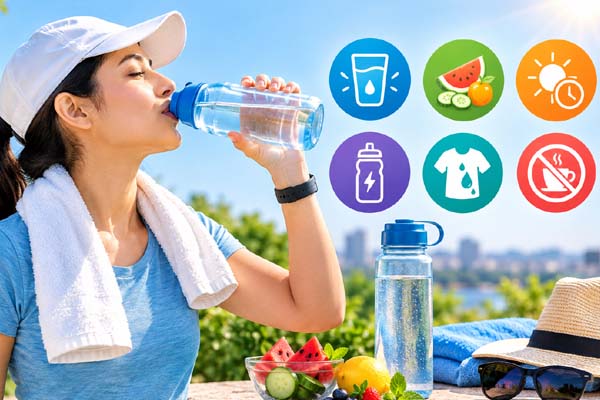
Hot weather can increase fluid loss through sweating, making regular hydration especially important. The simplest approach is to drink fluids regularly, carry water when you are outdoors, increase attention to hydration during exercise or heavy sweating, and avoid waiting until you feel extremely thirsty. Your fluid needs are not identical to someone else’s, so factors such as temperature, activity, age, health, and diet matter. People who are at higher risk of heat-related illness may need extra care.
Drink Regularly Instead of Waiting Too Long
One practical way to stay hydrated is to make drinking fluids part of your normal routine.
Keep water nearby during work, travel, exercise, and outdoor activities. Taking regular drinks throughout the day can be easier than trying to consume a large amount all at once.
Thirst can be a useful signal, but it is not the only thing to consider. Hot environments and physical activity can increase fluid losses, so you may need more fluids than usual.
The CDC notes that drinking more fluids than usual can help prevent dehydration during hot weather and recommends not waiting until you are thirsty to drink.
Your needs will vary. Someone sitting indoors in a cool room may need less than someone working outside in high heat.
| Situation | Helpful Habit |
| Hot day outdoors | Carry water and drink regularly |
| Exercise | Drink fluids before, during, and after activity as appropriate |
| Heavy sweating | Pay extra attention to fluid replacement |
| Long outdoor trip | Take enough water with you |
| Feeling unwell in heat | Move to a cooler place and seek help if symptoms are serious |
Pay Extra Attention During Exercise and Outdoor Work
Physical activity in hot weather can cause you to sweat more.
If you are walking, exercising, playing sports, or working outdoors, plan your fluid intake rather than assuming you will find water later.
Take breaks when appropriate and move into shade or a cooler environment when possible.
The amount of fluid required varies based on exercise intensity, duration, temperature, humidity, and individual factors.
For longer or more intense activities involving heavy sweating, electrolyte-containing drinks may sometimes be useful. However, ordinary water is appropriate for many routine activities.
Sports drinks can contain significant amounts of added sugar, so they are not automatically necessary for everyday hydration.
People with certain medical conditions or those taking medications that affect fluid balance should follow advice from their healthcare professional rather than relying on general hydration recommendations.
Choose Drinks Wisely
Water is a simple choice for staying hydrated and does not contain added sugar or calories.
Other drinks and foods can contribute to overall fluid intake too. Fruits and vegetables with high water content can be part of a balanced diet, while milk and other beverages also contain fluid.
However, some drinks may be less useful as your primary source of hydration.
Large amounts of sugary drinks can add unnecessary sugar and calories. Caffeinated drinks can contribute to fluid intake, although people respond differently to caffeine and very high caffeine intake is not advisable.
Alcohol is particularly unsuitable as a hydration strategy and can contribute to dehydration in some circumstances.
The goal is not to avoid every drink except water. Instead, make water and other appropriate fluids a regular part of your day.
Recognize Signs That You May Need More Fluids
Dehydration can develop when the body loses more fluids than it takes in.
Possible signs include thirst, dry mouth, tiredness, dizziness, and reduced urination. The CDC lists symptoms of dehydration and heat-related illness and recommends taking action when symptoms occur during hot weather. (cdc.gov)
Do not ignore symptoms that become severe.
Heat exhaustion can include heavy sweating, weakness, dizziness, headache, nausea, and other symptoms. Moving to a cooler location, drinking appropriate fluids, and cooling the body are important steps.
Heat stroke is a medical emergency. Signs can include confusion, altered mental status, loss of consciousness, or very high body temperature. If heat stroke is suspected, seek emergency medical help immediately.
Be Extra Careful During Very Hot Days
Some people are more vulnerable to heat-related illness, including older adults, young children, people with certain chronic health conditions, and people taking certain medications.
On extremely hot days, reduce unnecessary time outdoors during the hottest periods when possible.
Use shade, air conditioning, fans where appropriate, and cooler indoor spaces to reduce heat exposure.
If you work outdoors, plan breaks and make sure water is accessible. Avoid treating hydration as the only protection against heat. Staying cool and reducing excessive heat exposure are also important.
If you have a medical condition that affects fluid intake or have been told to limit fluids, follow your healthcare professional’s advice rather than increasing fluid intake based on general recommendations.
Conclusion
Staying hydrated in hot weather is mainly about paying attention to your fluid needs before you become seriously dehydrated. Drink regularly, carry water when you are outdoors, take breaks during heat and exercise, and watch for signs of dehydration or heat-related illness. When symptoms become severe, seek medical help promptly.
Learn simple wireless and wired methods to connect your phone to a TV for easy screen sharing and streaming.
FAQs
How much water should I drink in hot weather?
There is no single amount that works for everyone. Fluid needs vary with temperature, activity, sweating, diet, health, and other factors.
Is water enough for hydration?
For many everyday situations, water is an excellent choice. Longer or intense activities involving heavy sweating may sometimes require additional electrolytes.
Should I wait until I feel thirsty to drink?
It is better to drink regularly, particularly during hot weather or physical activity, rather than waiting until you become very thirsty.
What should I do if I feel dizzy in extreme heat?
Move to a cooler place, stop strenuous activity, drink appropriate fluids, and seek medical help if symptoms are severe, worsening, or suggest heat stroke.
