

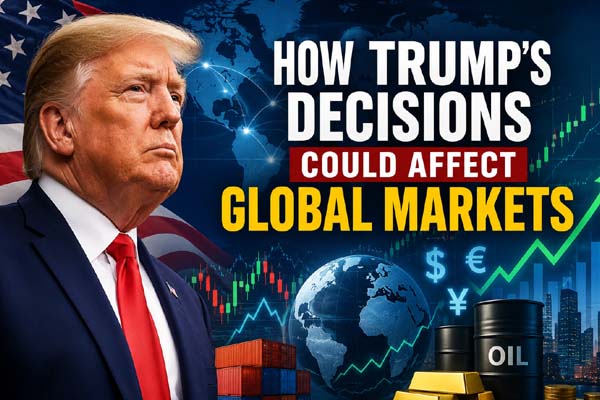
Changes in U.S. government policy under Donald Trump can influence global markets because the United States is the world’s largest economy. Decisions on tariffs, taxes, trade, government spending, and foreign relations can affect stock markets, currencies, commodities, and investor confidence across many countries. While no president controls the markets alone, Trump’s policies have historically attracted strong attention from investors, making Trump global markets and Trump market impact important topics for anyone following the economy.
| Fast Info | Details |
| What matters most | Trade policy, tariffs, taxes, interest rates, and government spending |
| Markets affected | Stocks, bonds, currencies, and commodities |
| Who may notice the impact | Investors, businesses, traders, and consumers |
| Main risk | Policy uncertainty can increase market volatility |
| Long-term focus | Economic growth, inflation, and corporate earnings |
Why U.S. Policies Influence the Global Economy
The U.S. economy accounts for a large share of global trade and investment. Because of this, major policy changes often affect financial markets well beyond America’s borders.
Investors pay close attention to announcements involving trade agreements, tax changes, manufacturing, energy policy, and international relations. Even before new laws take effect, markets often respond based on expectations of how businesses and consumers could be affected.
For example, if companies expect lower taxes or reduced regulations, stock prices may rise because investors anticipate stronger profits. On the other hand, uncertainty around trade or foreign policy can increase market volatility as investors reassess future risks.
Trade and Tariffs Often Have the Biggest Market Impact
One of the most closely watched areas of Trump market impact is trade policy. During his first presidency, tariffs were introduced on many imported goods, particularly those from China. Similar measures in the future could once again influence global supply chains and international business.
Possible effects of higher tariffs include:
- Increased costs for manufacturers
- Higher prices for some imported products
- Changes in global supply chains
- Pressure on exporting businesses
- Slower international trade growth
Some U.S. industries may benefit from reduced foreign competition, while companies that depend on imported materials could face higher operating costs.
Because modern businesses operate globally, trade decisions in one country often create ripple effects across many economies.
Financial Markets Can React Within Minutes
Financial markets respond quickly whenever investors receive important economic or political news.
Different markets may react in different ways depending on the announcement.
| Market | Possible Response |
| Stock Market | Share prices may rise or fall as investors adjust expectations. |
| U.S. Dollar | Currency value may strengthen or weaken depending on economic outlook. |
| Bond Market | Bond yields may change based on inflation and government borrowing expectations. |
| Oil | Energy policies and global demand can influence prices. |
| Gold | Investors often buy gold during periods of uncertainty. |
These reactions are not always permanent. Markets frequently recover or change direction as more information becomes available and investors evaluate the long-term economic outlook.
Other Economic Factors Also Matter
Although presidential decisions can influence markets, they are only one part of a much larger picture.
Global financial markets are also affected by:
- Federal Reserve interest rate decisions
- Inflation levels
- Consumer spending
- Employment growth
- Corporate earnings
- Global economic conditions
- Geopolitical events
For example, strong company earnings may support stock markets even during political uncertainty. Likewise, rising inflation or higher interest rates can affect markets regardless of who occupies the White House.
This is why economists evaluate multiple indicators rather than focusing on political headlines alone.
What Investors Should Watch Going Forward
Investors should focus on confirmed policy changes instead of reacting to every statement or news headline.
Some of the most important areas to monitor include:
- New tariff announcements
- Tax policy changes
- Trade negotiations
- Government spending plans
- Inflation reports
- Federal Reserve decisions
- Quarterly corporate earnings
A diversified investment strategy and a long-term perspective remain important during periods of political uncertainty. While short-term market swings are common, long-term investment performance is typically driven by economic growth, business profitability, and productivity rather than individual headlines.
Conclusion
The Trump global markets discussion highlights how U.S. policy decisions can influence economies around the world. Trade, taxes, tariffs, and government spending can all affect investor confidence and financial markets. However, the overall Trump market impact depends on many factors working together, including inflation, interest rates, corporate earnings, and global economic conditions. Staying informed and focusing on long-term trends can help investors make more balanced decisions.
Want to know about Louise Haigh’s partner? Read the full story here.
FAQs
1. Why do Trump’s policies affect global markets?
Because the United States plays a leading role in the global economy, changes in trade, tax, and spending policies can influence businesses and investors worldwide.
2. Do tariffs always cause stock markets to fall?
No. Markets react differently depending on the size of the tariffs, investor expectations, and other economic conditions.
3. Which markets are most affected by major U.S. policy changes?
Stocks, bonds, currencies, commodities, and international trade-related industries often respond the most.
4. Should investors make decisions based only on political news?
No. Long-term investment decisions should consider economic data, corporate performance, interest rates, diversification, and personal financial goals rather than political headlines alone.
